
Homepage: How Google Analytics 4 Works

How does analytics work?
The basic task of analytics is to collect and analyze data about the behavior of website visitors, and some of the data we can analyze are:
- The number of visitors in a certain period of time and their structure (are they old or new visitors)
- Geographical location of visitors
- Information about the traffic source from which visitors came to the site (eg Google advertising)
- Time spent on the site - when our users are most active
- What devices do they use?
- Information about their interests
- Data on site page visits and average content
- Track and measure conversions – for example, newsletter sign-ups, sales
How does GA4 work?
It is certain that the new version of analytics will continue to perform these tasks but in a slightly different way. GA4 focuses on gathering data about events, which provides more detailed monitoring and analysis of users on the website. It is possible to track clicks on specific buttons, product reviews, video file reviews, file download tracking, and the like.
An important segment is the harmonization of data on multiple platforms such as websites and mobile applications, which means that it is possible to track users on all channels within a single entity. Google Universal Analytics was focused on tracking website traffic.
Google Analytics 4 will provide better integration with Google Ads, where more detailed tracking of users coming from paid promotion on Google Search and the Google Display network is possible, as well as which ad gave better performance and how users behave after clicking on the ad.
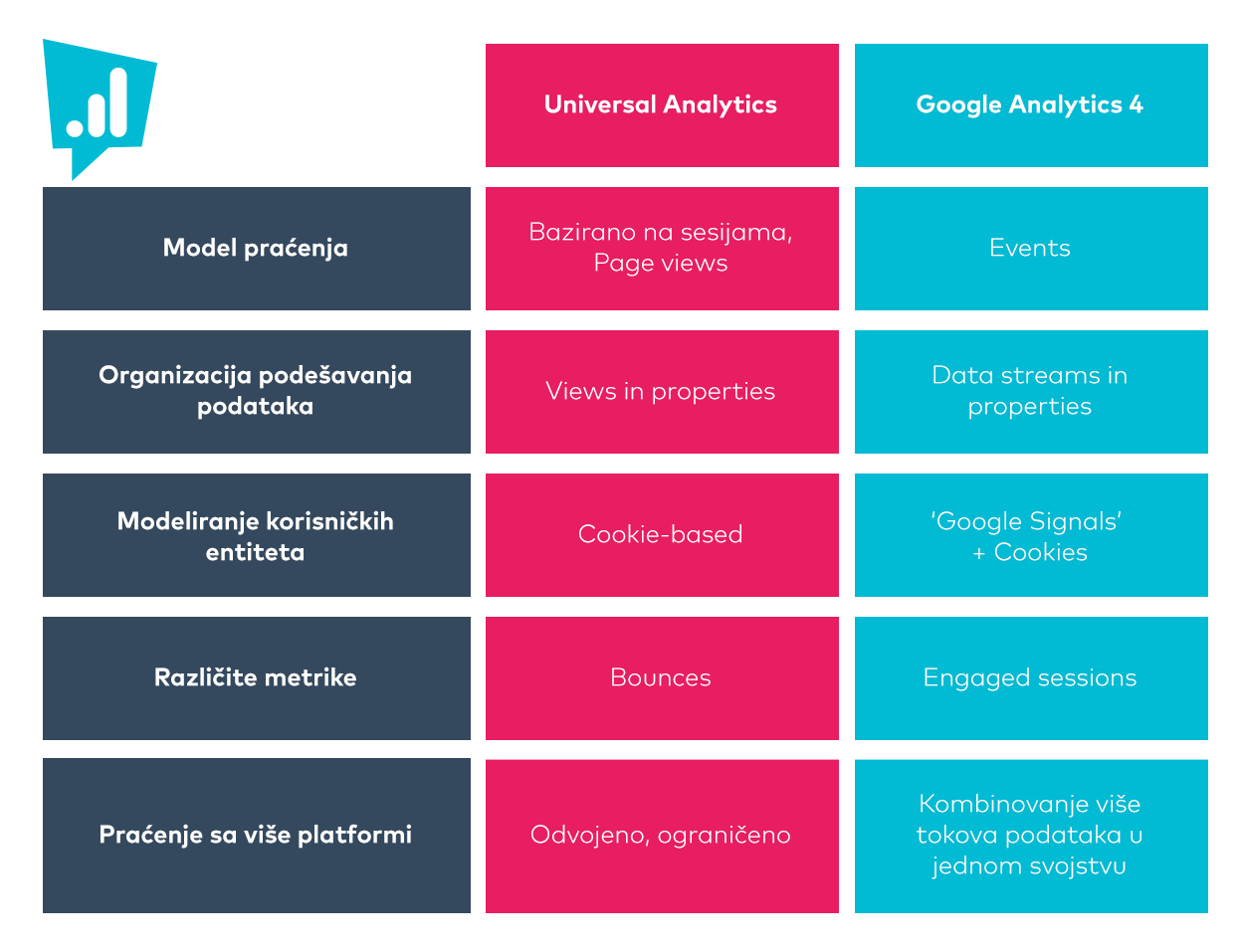
As the use of artificial intelligence (Artificial Intelligence) is increasingly present, Google has also applied AI in its new version of the tracking tool with the help of machine learning, with the aim of providing users with the best and most advanced functionality as well as a better understanding of user behavior on the website or application. .
The use of artificial intelligence opens the possibility for more detailed, accurate and automated data collection and analysis by being able to provide suggestions for optimization based on the collected information about the interests and behavior of users within the website or application.
Source: Homepage

Do Small Businesses Need Digital Marketing? - Blog

How a small fishing equipment store built its brand thanks to its online presence - Blog

10 Reasons Why A Small Business Needs an Online Store - Blog

Important elements of any website that you need to pay attention to - Blog
When you subscribe to the blog, we will send you an e-mail when there are new updates on the site so you wouldn't miss them.