
Key website statistics and growth trends by Hostinger

The number of websites in the world changes every second, with new domains going live, older sites disappearing, and millions sitting inactive – and the pace isn't slowing down.
So, how many websites are there? The simple answer is that there are approximately 1.34 billion websites.The real picture, however, is more complex. This figure represents every site that has been created, not just the number of active websites.
To accurately understand the landscape, you need to consider the distinction between active and inactive sites, the rate at which new websites are being created, and the broader trends driving global web growth and domain usage.
Top 10 website statistics for 2026
Tracking website growth trends provides valuable context and helps us understand the scale and complexity of the current web, as well as the changes that shape it over time.
- There are 1.34 billion websites globally, up from just 17 million in 2000 – a 75-fold increase in roughly 25 years.
- Only 15% of all websites are actively maintained. The other 85% sit dormant or inactive.
- Almost three-quarters of the global population is online, making the internet one of the fastest-adopted technologies in human history.
- More than two billion people are still offline due to infrastructure lagging behind demand.
- Approximately 1.25 million new websites are created daily, driven by steady growth in ecommerce expansion, content monetization, and digitalization efforts.
- Mobile devices account for 63% of all web traffic, overtaking desktops as the primary access point worldwide.
- Internet penetration reached 93% in North America, with most developed regions showing near-universal access. In contrast, Africa sits at 46% and South Asia at 49%.
- A total of 368 million domain names are registered worldwide, reflecting steady growth across the domain industry. However, .com maintains its dominance with 157.2 million registrations.
- 49.2% of websites are in English, while regional languages continue gaining ground as internet access expands.
- Active websites are increasing at a rate of 5% year-over-year, with the number of maintained sites expanding steadily and outpacing the growth rate of inactive domains.
- The web continues to expand rapidly, but access remains uneven, resulting in significant disparities in how people experience the internet globally.
How many websites are there in the world?
A website is any set of one or more web pages stored on a server and accessed through a domain name, ranging from a simple one-page site to complex platforms with millions of pages.
- 1.34 billion total websites globally represent the cumulative index of every site created and tracked by web server surveys (Netcraft).
- 6.04 billion internet users worldwide. This means 73.2% of the global population can access the internet, creating a huge audience for web content and online services (Statista).
- 2.21 billion people remain offline, with the biggest gaps in Southern Asia and Central Africa, where poor infrastructure, high costs, and other challenges prevent internet access (DataReportal).
- Internet access varies greatly by region. Rates range from 93% in North America to 46% in Africa, reflecting global infrastructure disparities (Statista).
How many websites are created every day?
More than a million new websites are created per day. This rapid daily pace is driven by a massive global interest in getting online and the low barriers to entry for starting a new site.
- An average of 37.5 million new websites is created monthly. This figure is calculated from month-to-month changes in Netcraft's indexed site totals.
- 63% of web traffic comes from mobile devices. Mobile browsing has become the primary way users access websites, excluding tablets. This completely shapes design choices and requires layouts that work well on smaller screens (Statista).
- The world's first website launched in 1991. Tim Berners-Lee's original site at CERN introduced the World Wide Web to the public, showing how hypertext worked and explaining the WWW project (CERN).
- Internet use grew from under 400 million users in 2000 to over 6 billion in 2025. This exponential increase in users directly correlates with the constant demand for new content and website creation (DataReportal).
The leap from a single website to more than a billion highlights how quickly the web has become central to global communication, commerce, and information sharing. That shift – from thousands to millions to billions within one generation – makes the internet one of the fastest-adopted technologies in history.
If you're thinking about launching a site of your own, checking out website ideas can help you find the right place to start and join this growing digital space.
The future of websites: AI and new web trends
The web's expansion isn't slowing down. Even though only 15% of the 1.34 billion registered websites are actively maintained, more than a million new sites launch each day, reflecting the constant churn of ideas, expired domains, and new online projects.
At the same time, website creation is becoming increasingly simpler through AI-powered platforms and modern building tools. The AI website builder represents this shift, making professional site creation accessible without coding knowledge.
As connectivity improves in regions where fewer than half of the people are online, the next wave of growth will bring more languages, more local content, and far broader global participation.
Together, these shifts point toward a web that's more accessible, more diverse, and more dynamic – one where anyone can build an online presence and keep it thriving.
Source: Hostinger
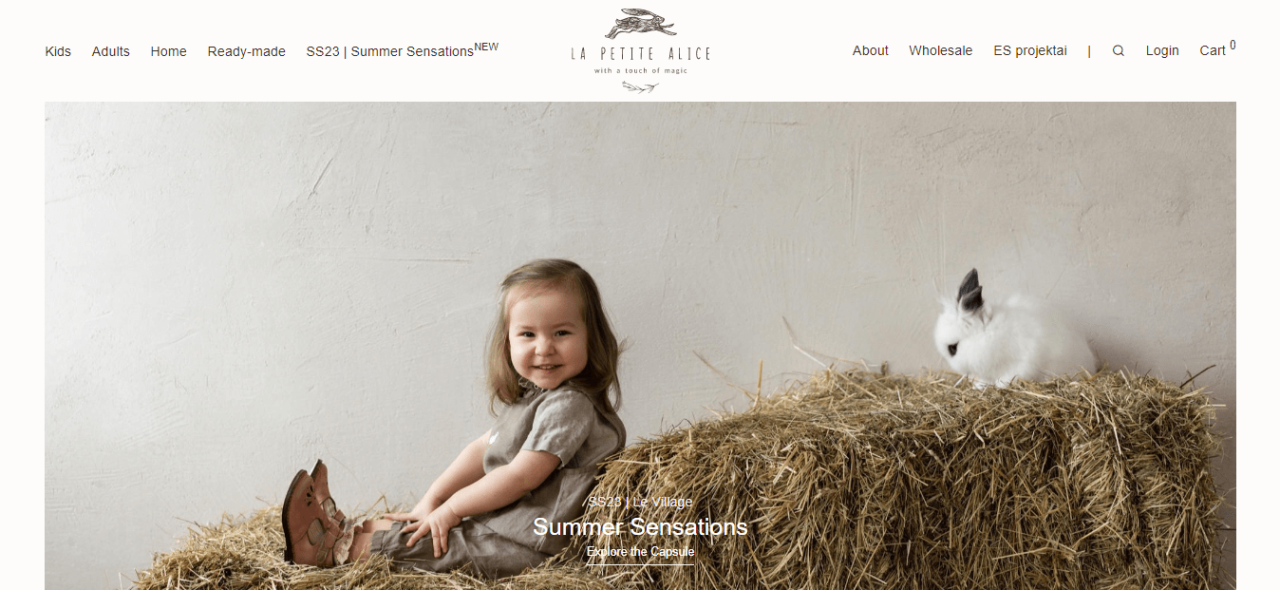
Hostinger: 20 Top Small Business Website Examples: From Clothing Stores to Restaurants - Blog

How a small business can benefit from an online presence - Blog

Are the presentation site (brochure) and the landing page the same? How are they different and what do they have in common? - Blog

18 small business web stores that inspire - Blog
When you subscribe to the blog, we will send you an e-mail when there are new updates on the site so you wouldn't miss them.